
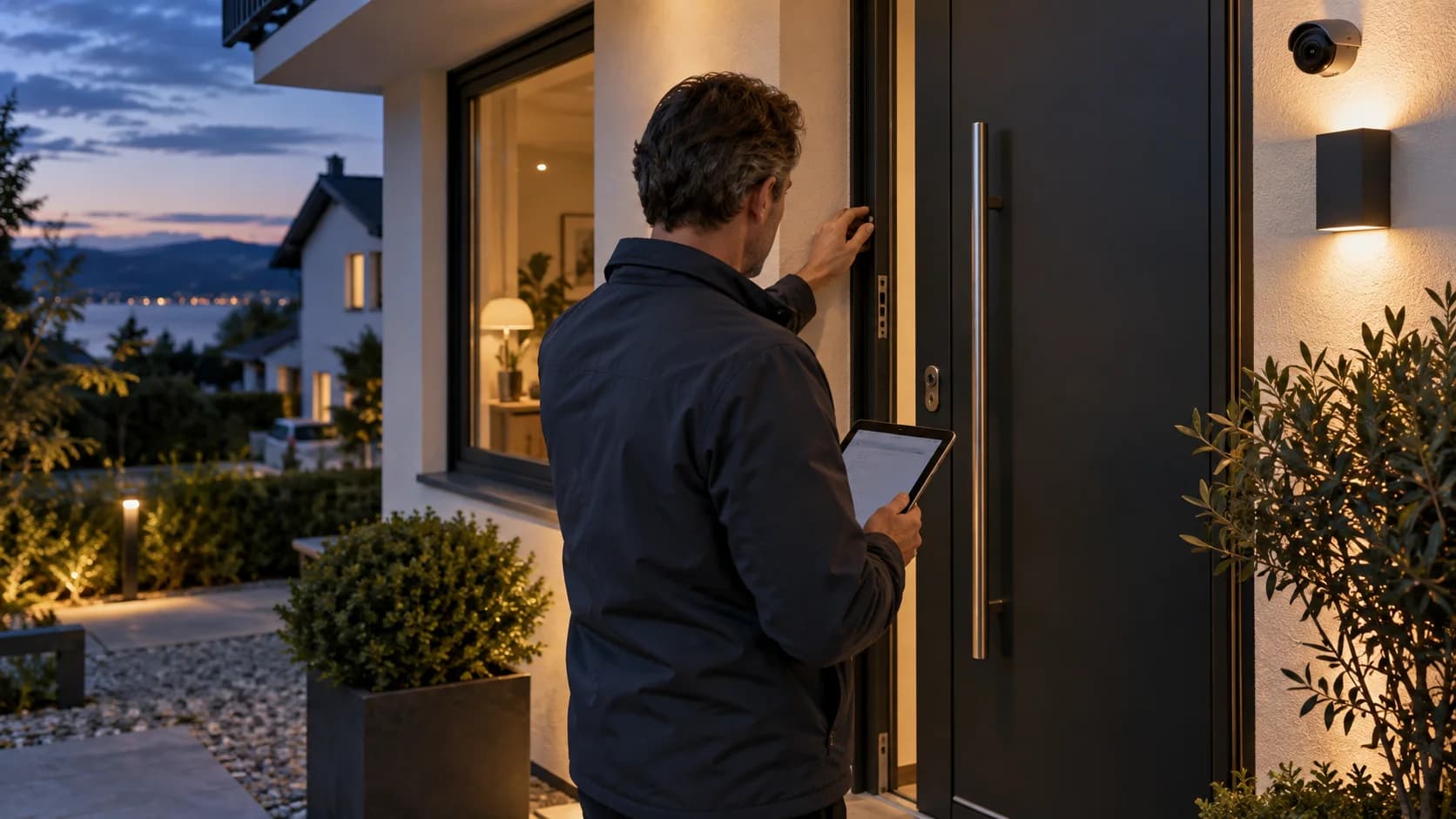
Apartment Door Security for Renters: Reversible Upgrades That Respect Your Lease
A practical, renter-friendly guide to checking an apartment entry door, choosing removable security measures, discussing hardware with a landlord, and protecting smart-lock accounts without compromising emergency exit.
Security and resilience editorial team · Source-reviewed editorial guidance; no certification, product testing, or laboratory testing is claimed.
Quick answer
Start by checking that the door closes and locks fully, the strike plate and frame are sound, and you can see who is outside before opening. Ask the landlord in writing before changing installed hardware. Use removable measures only when they do not block emergency exit, violate building fire rules, or interfere with other residents. For connected locks, secure the account, updates, and recovery access.
Key takeaways
- Inspect the whole door assembly: door, frame, hinges, strike, lock, and viewer; a new gadget cannot compensate for a damaged frame.
- Get written landlord approval before drilling, replacing a lock, changing cylinders, or altering a fire door or shared building system.
- Choose removable layers that do not obstruct required egress, self-closing doors, smoke seals, or the common corridor.
- If using a smart lock, confirm who controls the administrator account, how access is revoked, what happens during battery or network failure, and how to exit manually.
- Record the condition at move-in and report faults promptly; keep a reliable, lawful route to regain entry.
Inspect the complete entry door before buying anything
A useful renter door check starts with the installed door assembly, not a shopping list. Confirm that the door closes into the frame without lifting, rubbing, or being held shut; the existing lock engages reliably; the frame and strike area show no looseness or visible damage; and hinges, glazing, and the letter slot are intact. Photograph defects and report them to the landlord before attempting a repair.
Check the door from inside and outside where permitted. Try the normal handle and lock with the door open, then closed: operation should feel consistent, and the latch or bolt should engage without forcing the door. Do not dismantle the lock or test it with improvised tools. Note gaps, a loose handle, a misaligned strike, cracked wood, damaged seals, or a door that will not latch. These are maintenance issues to document and report, not a cue to modify the building door yourself.
Look at the frame around the lock and hinges, not only the cylinder. A replacement cylinder, alarm, or wedge does not repair a loose frame or badly fitting door. Greater Manchester Police’s checklist prompts residents to consider the door’s locking points, a viewer, a chain or restrictor, and letterbox protection. Treat these as inspection prompts rather than a guarantee of resistance or a universal standard: building design and local requirements differ.
At move-in, photograph the door, frame, lock, keys or fobs supplied, and any existing marks. Send a dated maintenance request if anything is unreliable. Ask the property manager who to contact for an urgent lockout, whether the building has a master-key or managed-entry system, and how lost keys or fobs are handled. Keep the response with your lease records.
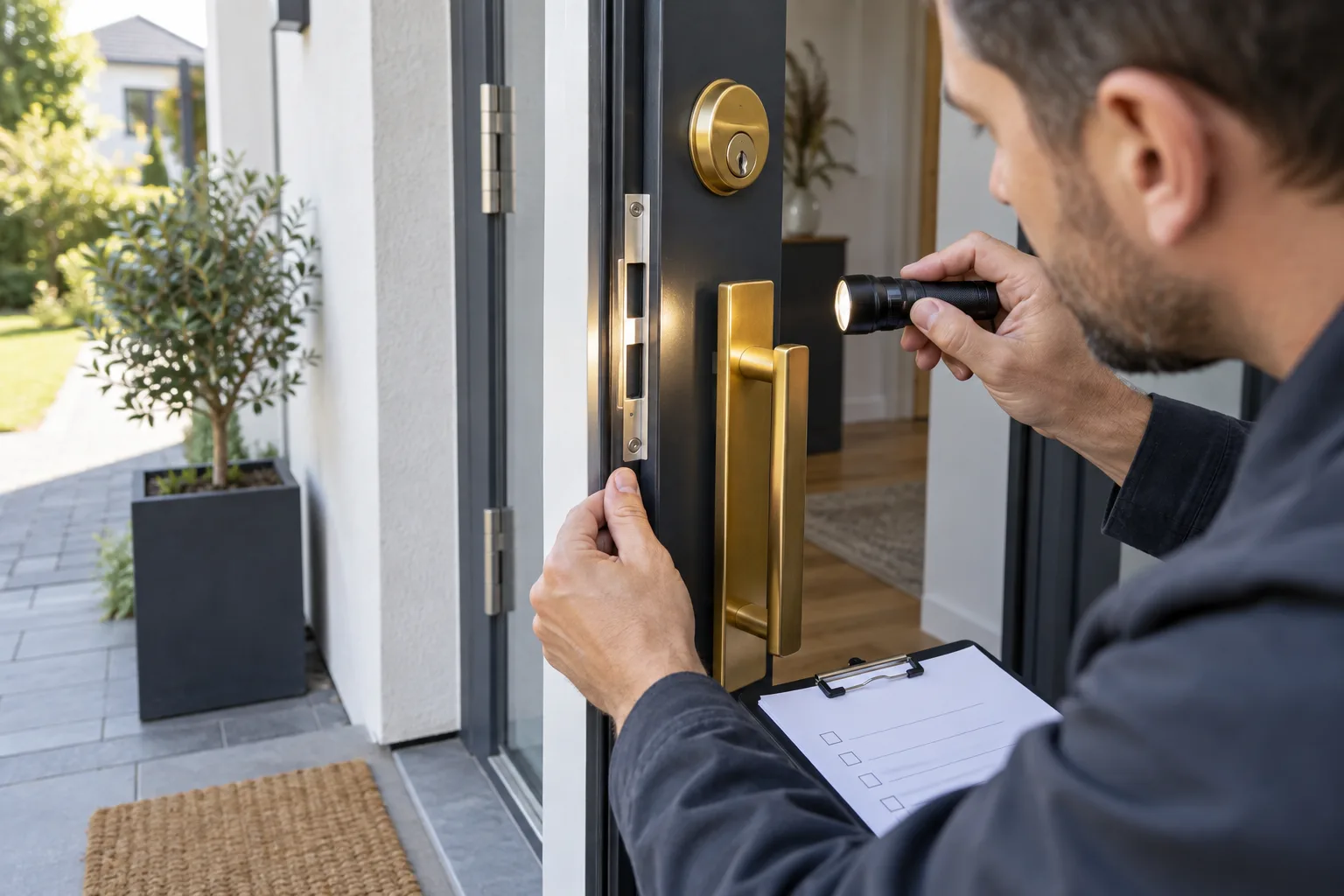
- • Does the door close and latch without lifting, slamming, or being pushed hard?
- • Does the existing lock work consistently with the door both open and closed?
- • Are the frame, strike plate area, hinges, and any glass or letter slot visibly sound?
- • Have you photographed existing defects and reported them in writing?
| Observation | Renter action | Avoid |
|---|---|---|
| Door drags, fails to latch, or lock binds | Document and report; ask for repair | Planing, drilling, or adjusting a fire door yourself |
| Loose frame, strike, handle, or hinge | Request landlord or qualified maintenance | Assuming an add-on alarm fixes the underlying defect |
| Unknown keys, fobs, or access history | Ask the manager about rekeying and access policy | Changing a shared or master-keyed cylinder without approval |
Sources for this section: Greater Manchester Police: Burglary Prevention Pack: Home Security Checklist, Leeds City Council: Fire safety principles for residential accommodation
Choose reversible upgrades and get approval for fixed changes
For renters, the safest starting point is a security layer that installs without permanent alteration and can be removed without damaging the door. Before changing a cylinder, adding screws, fitting a chain, or attaching anything to a fire-rated entrance, obtain written permission from the landlord or building manager. Check that any device leaves the door usable for emergency escape and does not obstruct a corridor or shared door.
A removable door wedge alarm can alert occupants when a door moves, but it is not a substitute for a sound lock, a repaired frame, or a working smoke alarm. A portable door security bar may resist opening in some door configurations, but fit, floor surface, door swing, and the device’s instructions matter. Treat either as an optional layer, not a rated barrier. Do not use one if it can jam the exit, prevent someone from leaving quickly, or make the door unsafe for another occupant.
Fixed changes need more care. Replacing a lock, changing a cylinder, fitting a viewer or chain, or adding screws can affect the landlord’s property, fire-door performance, warranties, and emergency access. Ask in writing what change is allowed, who will do the work, whether the original hardware must be retained, and how keys or codes will be returned at move-out. Do not assume that a product marketed as renter-friendly is automatically allowed by the lease or building policy.
Fire guidance is local and situation-specific. Leeds City Council’s residential guidance says certain flat and shared-building exit doors must open from the inside without a key and describes fire doors and self-closing devices. That is UK local-authority guidance, not a rule for every country or building. The practical lesson is to preserve free, dependable egress and never defeat a closer, smoke seal, fire door, or communal access-control system. If uncertain, ask the responsible manager or fire-safety contact before installation.

- • Ask permission before drilling, replacing, rekeying, or attaching permanent hardware.
- • Prefer removable products only where their placement and use preserve quick exit.
- • Keep original parts and written approval; agree in advance who restores the door at move-out.
- • Never disable a self-closing device or alter a fire door without qualified authorization.
| Upgrade type | Why a renter might consider it | Check first |
|---|---|---|
| Door wedge alarm | Portable alert at the entry | Does not block exit; works on the floor and door type; alarm can be silenced safely |
| Portable door bar | Removable resistance layer for compatible doors | Fit, floor contact, door swing, instructions, and fast release from inside |
| Cylinder or lock replacement | Could address lost keys or a maintenance concern | Written approval, shared-key system, emergency egress, key handover, qualified fitting |
| Viewer, chain, or restrictor | Lets a resident screen a caller while keeping the door closed | Permission, material and fire-door compatibility, and local rules |
Sources for this section: Greater Manchester Police: Burglary Prevention Pack: Home Security Checklist, Leeds City Council: Fire safety principles for residential accommodation
Screen visitors without opening the door
A door viewer, an existing glazed panel, or an approved camera can help a resident identify a caller while the door stays locked. Use the method already installed when possible, and do not open the door just because someone claims to represent building staff, a delivery company, or an emergency service. Verify unexpected visits through a known building contact or official number.
Greater Manchester Police’s public checklist includes a door viewer or glass pane and a door chain as features to consider. For a renter, that supports a simple routine: look first, keep the lock engaged, and speak through the closed door. If you do not recognize the caller, ask for a name and purpose, then independently contact the landlord, concierge, or organization using a number you already trust. A caller’s uniform or urgency is not proof of identity.
If the apartment has a viewer, check that it is not obscured and that you can use it comfortably. Do not install a peephole, chain, or door camera by drilling without permission. A camera may capture neighbors, visitors, or shared areas; before using one, review building policy and applicable privacy rules. Where an existing doorbell or building intercom is available, ask management how it is intended to be used and whether access logs or recordings are retained.
A chain or door restrictor is useful only if it is approved, correctly fitted, and compatible with the door. Do not treat it as a lock while leaving the main lock disengaged. Do not rely on a chain to stop forced entry. If a caller pressures you, says they need immediate access, or asks you to hand over keys or a code, keep the door closed and verify through an independent channel. For an immediate threat, move to a safer place and contact local emergency services.
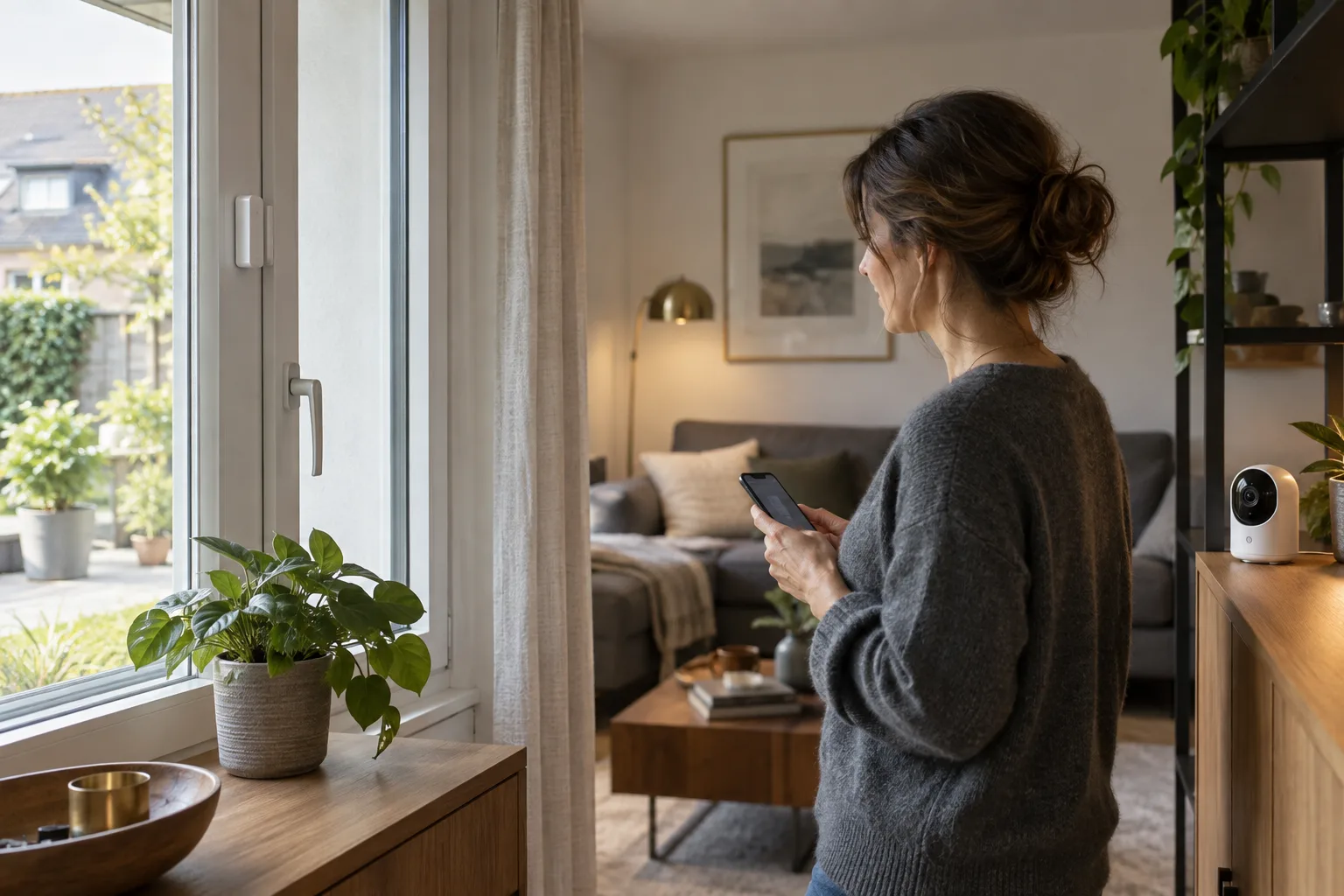
- • Keep the main lock engaged while identifying a caller.
- • Verify unexpected maintenance visits using a known landlord or building contact.
- • Do not share keys, fobs, or access codes with an unverified caller.
- • Check building and privacy rules before adding a camera that views shared space.
Sources for this section: Greater Manchester Police: Burglary Prevention Pack: Home Security Checklist
If you use a smart lock, secure the account and plan for failure
A smart lock is a connected access device, so evaluate both physical fit and account security. Before adopting one, confirm landlord approval, who controls administrator access, how old codes are removed, whether updates and support continue, and how you can unlock and exit if a phone, battery, Wi-Fi, or cloud service fails. Keep an approved mechanical or other documented recovery route.
NIST’s consumer IoT profile describes cybersecurity capabilities for products used at home or personally. NIST’s practical smart-home guidance recommends researching a device, enabling stronger authentication where available, avoiding password reuse, disabling unused features, reviewing privacy settings, applying updates, and considering a separate network for connected devices. The FTC similarly advises changing default credentials, using two-factor authentication when offered, updating devices and apps, and disabling remote management that is not needed. Apply these steps to the lock’s app and account, while remembering that the exact controls depend on the manufacturer and model.
Before purchase or installation, ask whether the lock replaces existing hardware or fits over it, whether a key remains usable, what happens when batteries run low, how to add and remove users, what data the app collects, and how long software support is expected. Check the manufacturer’s setup and recovery documentation rather than relying on a sales listing. If the owner or building manager retains administrator access, ask exactly what that access permits and how your own access will be removed at move-out.
Set a unique account password and turn on multi-factor authentication if available. Use an individual code for each household member if the product supports it, remove codes for former occupants, and avoid placing a code where it can be seen by visitors. Keep the app and device updated; turn off remote functions you do not use. Store the recovery instructions somewhere accessible if your phone is lost, and do not make a smart lock the only way to get in or out unless the responsible building authority confirms that arrangement is safe and lawful.
- • Confirm written permission and compatibility with the existing door and building access system.
- • Change default credentials, use a unique password, and enable multi-factor authentication when available.
- • Check update support, privacy settings, battery warnings, local unlock options, and user-removal steps.
- • Maintain a recovery plan that does not depend on a single phone, network, or cloud service.
| Question | What to verify | Reason |
|---|---|---|
| Who can administer it? | Owner, tenant, manager, and installer access; how accounts are removed | Avoid uncertainty over who can change access |
| What works offline? | Key, keypad, inside thumb turn, battery backup, or documented recovery path | Plan for phone, network, or service outage |
| How is it maintained? | Update process, support period, battery warnings, and privacy settings | Connected devices need ongoing attention |
| What happens at move-out? | Code deletion, account transfer or reset, and return of original hardware | Close out access cleanly |
Sources for this section: National Institute of Standards and Technology: Profile of the IoT Core Baseline for Consumer IoT Products, National Institute of Standards and Technology: 7 Tips to Keep Your Smart Home Safer and More Private, From a NIST Cybersecurity Researcher, U.S. Federal Trade Commission, Consumer Advice: Securing Your Internet-Connected Devices at Home
Keep access reliable, document changes, and close out safely
Good door security includes a practical recovery plan. Keep an authorized spare key or fob as the lease and building policy allow, know the approved lockout contact, and report a lost key, fob, or suspected copied code promptly. At move-out, return keys, remove your app access and personal codes, and confirm who resets any installed device or restores the original hardware.
Make a short household plan. Each resident should know how the door unlocks from inside, where the approved spare is held, who to call after hours, and what to do if the smart lock battery or app fails. Do not hide a key in a predictable shared area or give a building credential to an unverified person. If you lose a key or suspect someone has copied it, contact the landlord or building manager promptly and ask whether the cylinder or credential should be changed under the building’s process.
Keep copies of written approvals, maintenance requests, receipts, and before-and-after photographs. If the landlord arranges a repair or lock change, ask what keys or codes will remain active and who will receive them. If you are uncomfortable about a person who has legitimate access, do not alter the lock secretly; raise the issue with the responsible manager and use appropriate local tenant, housing, or emergency resources.
At move-out, remove your user profile, revoke guest codes, and transfer or factory-reset a connected device only as the owner or manufacturer instructs. Do not leave an account tied to your email or phone. Return keys and fobs using a documented handover. If the lease requires restoring the original hardware, arrange this with the landlord rather than leaving an unapproved modification. These steps reduce access confusion for both the departing renter and the next resident.
- • Save the building’s authorized lockout and maintenance contact details.
- • Report lost keys, fobs, codes, or malfunctioning hardware quickly.
- • At move-out, revoke your access, return credentials, and document the handover.
- • If immediate danger exists, leave by a safe route and call local emergency services.
Sources for this section: U.S. Federal Trade Commission, Consumer Advice: Securing Your Internet-Connected Devices at Home, National Institute of Standards and Technology: 7 Tips to Keep Your Smart Home Safer and More Private, From a NIST Cybersecurity Researcher
FAQ
Can I change the lock in a rented apartment?
That depends on your lease, local law, and any building master-key or fire-safety system. Ask the landlord or manager in writing before changing a cylinder or lock, and agree who holds keys and who restores the original hardware.
Are door wedges or security bars suitable for renters?
They can be removable layers for compatible doors, but they are not substitutes for a sound installed lock or a repair. Follow the product instructions and do not use any device that delays emergency exit or conflicts with building rules.
Should I install a door camera?
Check permission, building policy, and local privacy rules first, especially if the camera records shared corridors or neighbors. An existing viewer or intercom may allow caller screening without adding a camera.
What should I do if my apartment smart lock loses power or internet?
Follow the manufacturer’s documented recovery method and your building’s lockout procedure. Before relying on a smart lock, verify whether it supports a key or another local method and keep emergency contact details available.
Does a chain make the apartment door secure?
A chain can let you speak with a caller while the door remains partly restricted, but it is not a replacement for the main lock and is not a guarantee against forced entry. Fixed chains also require landlord approval and must not interfere with the door’s safety function.
Methodology and sources
We reviewed public guidance from NIST, the U.S. Federal Trade Commission, Leeds City Council, and Greater Manchester Police, accessed 2026-10-13. The cited documents address consumer IoT security, connected-device account and update practices, fire and escape-route considerations in a UK local-authority context, and a police home-security checklist. They do not establish one universal lock specification or settle local tenancy law. Recommendations below distinguish those sourced principles from practical editorial advice. We did not test products, inspect any property, or assess a particular lease. Verify building rules, local fire requirements, and landlord obligations in your jurisdiction before modifying installed hardware.
- National Institute of Standards and Technology: Profile of the IoT Core Baseline for Consumer IoT Products · accessed 2026-10-13
- National Institute of Standards and Technology: 7 Tips to Keep Your Smart Home Safer and More Private, From a NIST Cybersecurity Researcher · accessed 2026-10-13
- U.S. Federal Trade Commission, Consumer Advice: Securing Your Internet-Connected Devices at Home · accessed 2026-10-13
- Leeds City Council: Fire safety principles for residential accommodation · accessed 2026-10-13
- Greater Manchester Police: Burglary Prevention Pack: Home Security Checklist · accessed 2026-10-13