
Your personal response plan after a data breach
A practical checklist for verifying a breach, protecting accounts and money, addressing exposed identity details, and documenting recovery—with distinct steps for Poland and the United States.
Security and resilience editorial team · Guidance reviewed against primary public-agency and standards sources; no professional certifications or laboratory testing claimed.
Quick answer
Verify the breach through the organisation’s official website or app, then identify exactly what was exposed. Contact your bank immediately if money or payment details are at risk. Secure affected accounts and reused passwords, review active sessions, and enable stronger authentication. Apply identity protections appropriate to your country, preserve evidence, and schedule follow-up checks.
Key takeaways
- Choose actions according to the exposed information and signs of misuse, rather than treating every breach alike.
- An unfamiliar transaction or account takeover needs immediate escalation through verified support channels.
- Changing a password is only part of recovery: check sessions, recovery details and email forwarding.
- Polish PESEL reservation and US credit freezes address different systems and are not interchangeable.
- Keep a dated action log and continue reviewing accounts after the initial cleanup.
1. Verify the notice and decide what needs attention first
Start by confirming the incident through an independently opened official channel and listing the information exposed. Prioritise active financial loss, account takeover and exposed identity credentials. A breach notice establishes possible exposure; it does not by itself prove that someone has accessed your accounts or stolen your identity.
Open the organisation’s app, use a saved bookmark or type its known address. Read the full notice rather than relying on a headline or forwarded screenshot. Record the incident date, notification date, affected service, stated data categories and any unanswered questions. If the notice says only “personal information”, ask the organisation to clarify which fields relate to your account.
Create a small incident worksheet with four columns: finding, action, confirmation and next review. For example, “payment card exposed” should lead to a bank contact and a recorded outcome, not simply a tick beside “read notice”. Keep uncertainty visible: write “password exposure not confirmed” instead of assuming either safety or compromise.
Use the table to choose parallel tasks if several categories were exposed. If you are helping a relative, agree who will contact each provider and who will maintain the log. This is an editorial way to organise the work; it is not a requirement to finish every task before asking a bank for urgent help.
- • Use contact details obtained independently of the incoming breach message.
- • Record what the organisation confirms, what remains unknown and the support reference.
- • Escalate evidence of ongoing misuse immediately; do not wait for a complete worksheet.
| Exposure or warning sign | First response | Important limitation |
|---|---|---|
| Unauthorised transaction or exposed card details | Contact the bank through its app or a verified number | A password change does not replace a payment dispute |
| Exposed password or unfamiliar account activity | Secure the affected account and any reused credentials | Other active sessions may need separate attention |
| PESEL, identity document or US Social Security number | Use the relevant national identity-protection route | Protection differs by jurisdiction |
| Email address, phone number or postal address | Prepare for targeted impersonation and review privacy | Knowing your details does not authenticate a caller |
Sources for this section: CERT Polska / NASK: Co zrobić w przypadku wycieku danych? Praktyczny poradnik krok po kroku, Federal Trade Commission: What To Do After a Data Breach, UK National Cyber Security Centre: Phishing scams: how to spot and report them
2. Recover accounts and close remaining access
For an affected account, replace the compromised password, address password reuse and review remaining access. Give particular attention to email because it supports recovery of other services. If you cannot sign in, follow the provider’s official recovery process rather than paying someone who promises to restore access.
Work from an account list instead of changing unrelated passwords at random. Mark which services used the exposed password, including close variations, and which depend on the affected email address. Use a password manager to create and store different passwords. CERT Polska recommends unique passwords and changing a password when compromise is suspected, rather than routine changes without a reason.
For email, inspect forwarding rules and filters, then check the account’s recovery email address, telephone number and security settings. Sign out other devices and apps using the service’s security controls. The exact menus differ between providers, so use their help pages and record whether the action succeeded. A new password alone is not a complete recovery record.
If messages were sent from your account without permission, warn contacts through a channel you still control. State which messages to disregard and how to verify future requests. If provider recovery fails, make a migration list for essential services tied to the old address; avoid abandoning it without considering those dependencies.
- • Record affected services without writing live passwords into the incident log.
- • Confirm that recovery contact details belong to you.
- • Keep support case numbers and unresolved recovery steps together.
Sources for this section: UK National Cyber Security Centre: Recovering a hacked account, CERT Polska / NASK: Zadbaj o bezpieczne hasła i logowanie
3. Protect money and use the right identity safeguards
Contact your bank immediately about exposed payment credentials or transactions you did not authorise. For identity information, use country-specific protections: Poland offers PESEL reservation, while US consumers can freeze their credit reports. Neither measure removes leaked information or replaces reporting misuse that has already happened.
Tell the bank what was exposed and distinguish an unfamiliar transaction from a suspicious message that has not led to a payment. Ask which cards or access methods need blocking, how to submit a dispute and how to provide evidence securely. Record the bank’s instructions and any follow-up date. Do not assume a temporary card lock resolves every consequence of exposure.
In Poland, the official Gov.pl service explains how adults with a PESEL number can reserve it online or through an office. The service is free and immediate. You can also arrange automatic reservation after a temporary reversal. Check the official instructions before an intended transaction that may require lifting the reservation.
For US credit protection, the FTC explains that a freeze must be placed with Equifax, Experian and TransUnion separately. A fraud alert is a different measure and can be initiated through one bureau. Keep the confirmations in your worksheet. If you live elsewhere, identify the local equivalent rather than assuming either the Polish or US process applies.
- • Separate bank case references from identity-protection confirmations.
- • Ask for specific instructions when identity-document details or an image were exposed.
- • Review unfamiliar credit accounts or debts as possible misuse requiring investigation.
Sources for this section: CERT Polska / NASK: Co zrobić w przypadku wycieku danych? Praktyczny poradnik krok po kroku, Gov.pl: Zastrzeż swój numer PESEL lub cofnij zastrzeżenie, Federal Trade Commission: Credit Freezes and Fraud Alerts, Federal Trade Commission: What To Do After a Data Breach
4. Strengthen sign-in without losing your recovery route
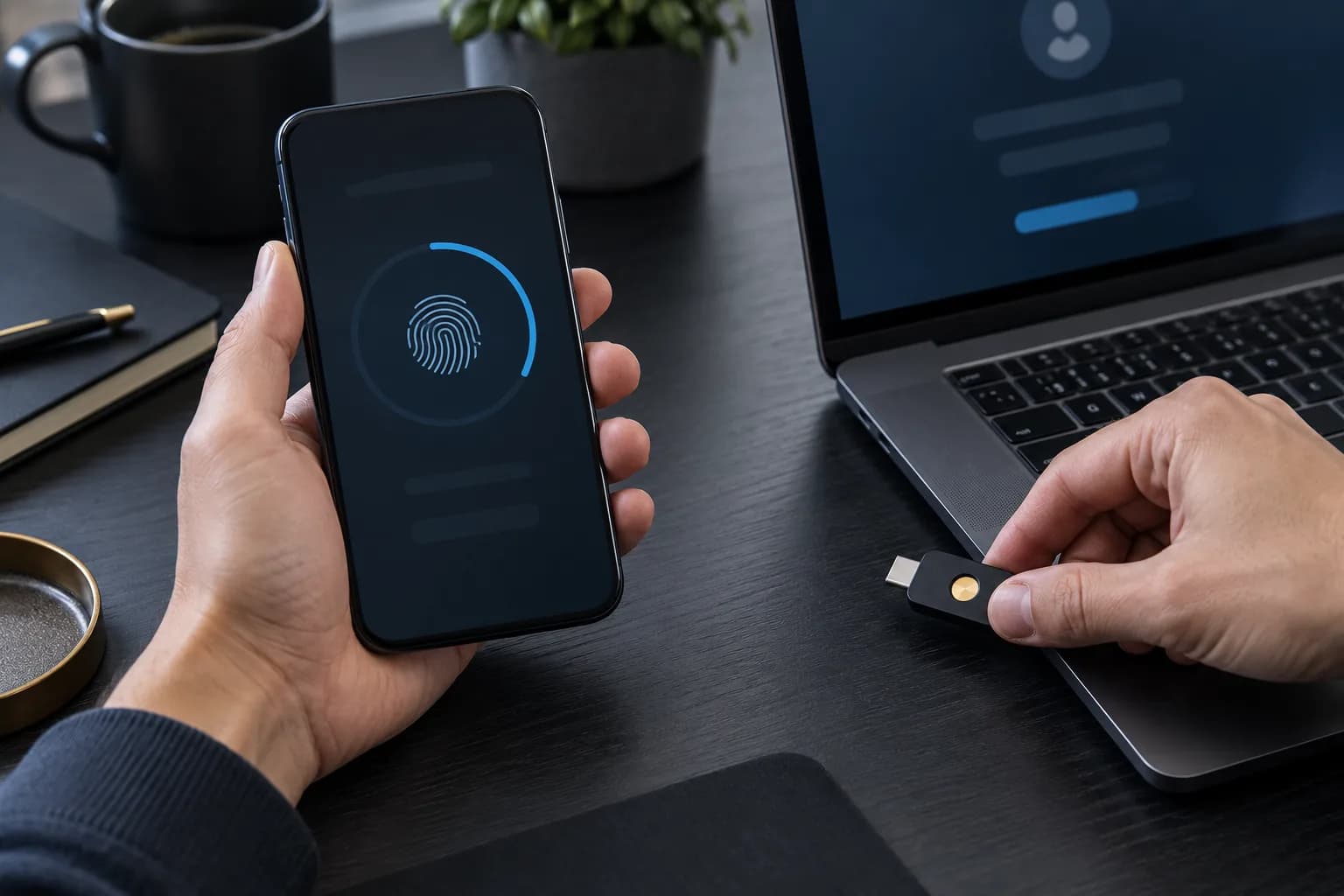
After securing access, enable stronger authentication supported by each important service. Passkeys and compatible FIDO security keys can provide phishing-resistant authentication; manually entered one-time codes do not offer the same protection. Before changing methods, check how you would recover the account if your usual device became unavailable.
Start with email, then accounts that matter most to your finances, work or personal communications. Make a simple record of the available authentication method, where recovery instructions are kept and which device or authenticator is required. Do not put recovery codes in the same shared incident worksheet used to track support calls.
A hardware security key is an optional tool, not a prerequisite for beginning recovery. Check that the service supports the intended sign-in method and that the key works with your devices. The generic product reference here is not a claim about a particular model’s compatibility, certification or performance. A supported passkey may already meet your needs without another purchase.
Test the new method while you still have a working recovery route. Our suggested acceptance check is practical: can you sign in, explain the fallback process and locate the provider’s recovery instructions? If the answer is unclear, resolve that uncertainty before removing a working method. Stronger authentication reduces particular attack opportunities; it cannot retrieve records already copied from an organisation.
- • Prefer phishing-resistant authentication where supported.
- • Treat recovery planning as part of setup.
- • Do not approve an unexpected authentication request.
Sources for this section: National Institute of Standards and Technology: Digital Identity Guidelines: Authentication and Authenticator Management, SP 800-63B-4, CERT Polska / NASK: Zadbaj o bezpieczne hasła i logowanie
5. Preserve evidence and make recovery a scheduled task
Keep the breach notice, relevant messages, transaction details and provider reference numbers in a protected incident record. Report suspected crime through the appropriate local route and use the organisation’s complaint process where needed. Continue reviewing accounts because completing the initial checklist does not establish that all consequences have ended.
Separate original evidence from your working notes. Preserve the message or notice as received, then add a dated explanation of what you observed and which action you took. Share documents only through a verified reporting channel and provide the information requested, rather than circulating a full identity-document copy with every enquiry.
Use a manageable editorial schedule: review unresolved tasks the next day, reassess the worksheet after a week, and add recurring financial and account checks over the following months. These are planning prompts, not official deadlines or a point at which exposure becomes harmless. Bring the next review forward whenever a new notice, unfamiliar login or disputed transaction appears.
Prepare a short response script for unexpected contact: “I will contact the organisation through its published channel.” Personal details can make a fraudulent request sound convincing. At each review, also ask whether unused accounts or unnecessary stored information can be reduced. Close a task when the specific action is confirmed; keep unresolved disputes and provider investigations open.
- • For US identity misuse, the FTC points consumers to IdentityTheft.gov for reporting and recovery.
- • In Poland, distinguish reporting suspected crime to police from a data-protection complaint to UODO.
- • A negative breach-search result is not proof that information was never exposed.
Sources for this section: Federal Trade Commission: What To Do After a Data Breach, CERT Polska / NASK: Co zrobić w przypadku wycieku danych? Praktyczny poradnik krok po kroku, UK National Cyber Security Centre: Phishing scams: how to spot and report them
FAQ
Should I change every password after a breach?
Change the affected password and passwords reused elsewhere, including close variations. Prioritise essential accounts. CERT Polska does not recommend routine password changes without a reason; use unique passwords and stronger authentication instead.
Does a breach notice mean my identity has been stolen?
No. Exposure and confirmed misuse are different findings. Follow the notice’s verified instructions, protect the relevant accounts or identity records, and investigate unfamiliar activity.
Can a hardware security key undo a data leak?
No. A compatible key can strengthen future authentication. It cannot remove copied information, reverse payments or substitute for account recovery and identity-protection measures.
What if only my email address was exposed?
Be alert to targeted phishing and verify unexpected requests independently. An exposed address alone does not establish that the mailbox password was stolen. Check the notice’s data categories before deciding which credentials require replacement.
When can I stop monitoring?
There is no universal safe stopping date in the reviewed guidance. Keep routine financial checks, review new security alerts and retain unresolved case records. The suggested next-day, weekly and monthly reviews are organisational prompts.
Methodology and sources
Reviewed on 2026-10-23 using live search and direct retrieval of primary guidance from CERT Polska, Gov.pl, the FTC, the UK NCSC and NIST. We separated country-specific identity measures from general account recovery. The suggested work order, incident worksheet and review schedule are editorial tools, not agency deadlines or guarantees. NIST guidance informs authentication choices; its organisational requirements are not presented as obligations for individual readers. No breach datasets, commercial monitoring services or products were tested.
- CERT Polska / NASK: Co zrobić w przypadku wycieku danych? Praktyczny poradnik krok po kroku · accessed 2026-10-23
- Federal Trade Commission: What To Do After a Data Breach · accessed 2026-10-23
- Gov.pl: Zastrzeż swój numer PESEL lub cofnij zastrzeżenie · accessed 2026-10-23
- Federal Trade Commission: Credit Freezes and Fraud Alerts · accessed 2026-10-23
- UK National Cyber Security Centre: Recovering a hacked account · accessed 2026-10-23
- UK National Cyber Security Centre: Phishing scams: how to spot and report them · accessed 2026-10-23
- CERT Polska / NASK: Zadbaj o bezpieczne hasła i logowanie · accessed 2026-10-23
- National Institute of Standards and Technology: Digital Identity Guidelines: Authentication and Authenticator Management, SP 800-63B-4 · accessed 2026-10-23